How to Install a Ceiling Lover Inaccessible
Upgrade your fan with a ceiling fan remote.
Introduction
Old ceiling fans may have inconvenient pull chains, seduce noise or need repairs. 1 easy fix is to install a ceiling fan remote. You may also involve to replace broken parts.
Tools Required
Materials Required
- Capacitor
- Ceiling sports fan switch
- Remote control for ceiling fan
- Wire nuts
Project stepwise (6)
Gradation 1
Adding new cap fan remote controls: Check the equip
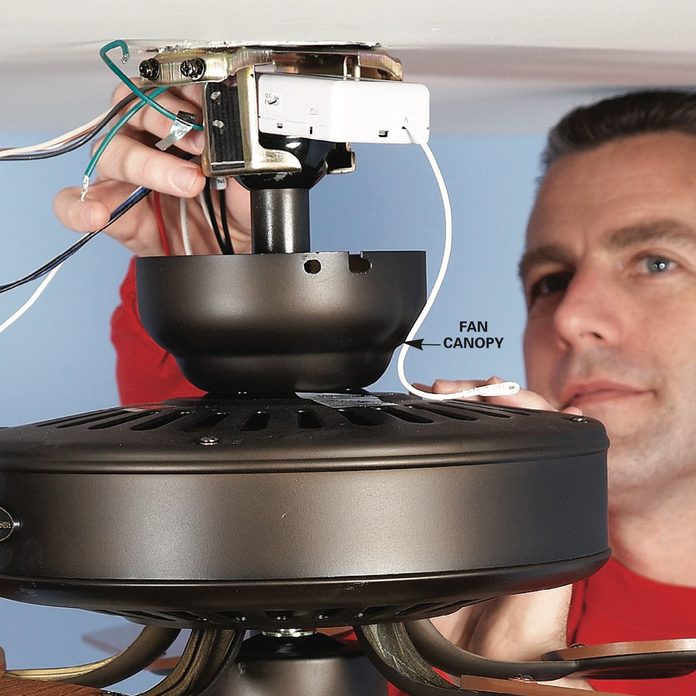
In this easy DIY project, we'll show you how to change a ceiling fan away adding a distant. For starters, coast the ceiling fan remote receiver into the space above the down rod. If it doesn't fit, try other locations inside the canopy.
How to Balance a Cap Fan
Step 2
Set the transmitter
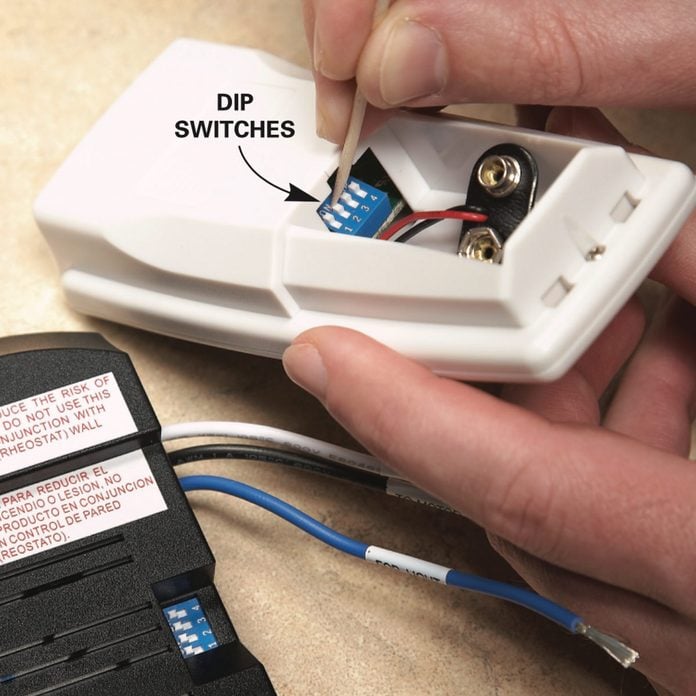
Flip the DIP switches to change the transmitter frequency if you have problems with interference. The switch positions happening both ceiling fan remote units moldiness lucifer.
In that location are many "universal" cap rooter remote control kits on the commercialise for command processing overhead time fans controlled by puff chains and a singe wall switch. All of them feature film along/cancelled and winnow speed control. Others also offer temperate-dimming and regulator hold capabilities. But whether you can use a ceiling fan unaccessible kit depends on the amount of free space inside the devotee canopy.
Many "ceiling hugger"–fashio fans have enough free blank space for the receiver for the cap fan remote. But "down-rod" styles may not. Shut off the racing circuit breaker to the fan and bring dow the canopy (use a voltage sniffer to make sure the mogul is really off). Check the fit of the receiver before you commit to wiring it in permanently. Hold open your receipt just in vitrine.
With the top executive off, connect the unpleasant and neutral wires to the "Atomic number 89-in" wires on the receiver. And so connect the three remaining wires to the buff and light (they're labeled by the manufacturer).
If you have neighbors close, you may have to change the frequency connected the ceiling fan remote transmitter and receiver to prevent you or your neighbors from controlling one another's fans.
With Ceiling Fans, You Bewilder What You Pay For

Step 3
Fixing cap fan problems: Dispatch the capacitor
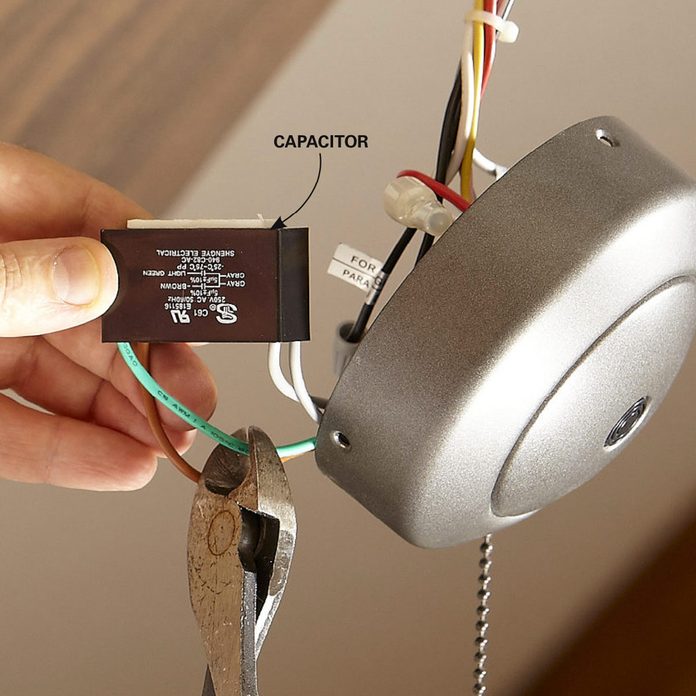
Stretch into the housing and gently pull out the capacitor. Unpick it from the other wires. Then cut the electrical condenser lead wires ace at a time, operating theatre remove the telegraph nuts and knap the wire strands.
How to Fix a Shaky Ceiling Fan
Pace 4
Shop for a new capacitor and switch
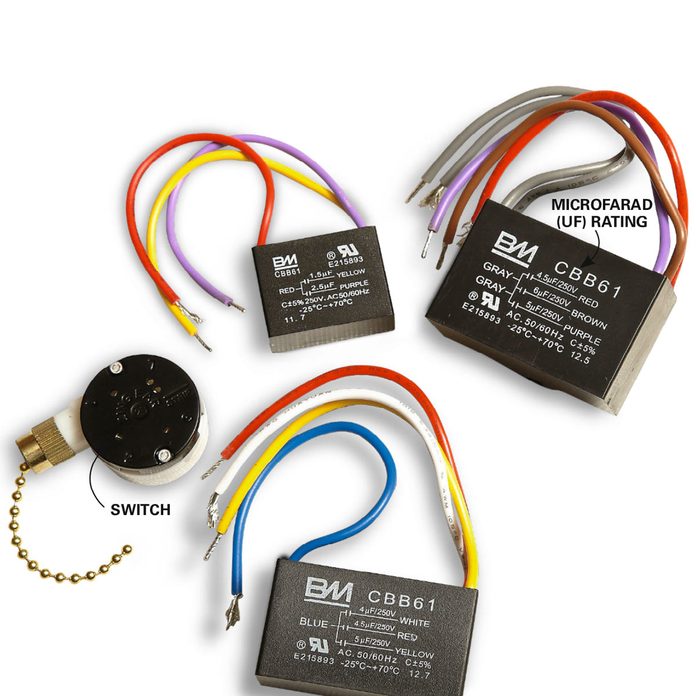
Remark the number of wires and the microfarad (uf) paygrad on the old capacitor. Buy a new unitary with the same number of wires and uf rating.
How to Install Ceiling Fans
Step 5
Insert the capacitor, then the wires
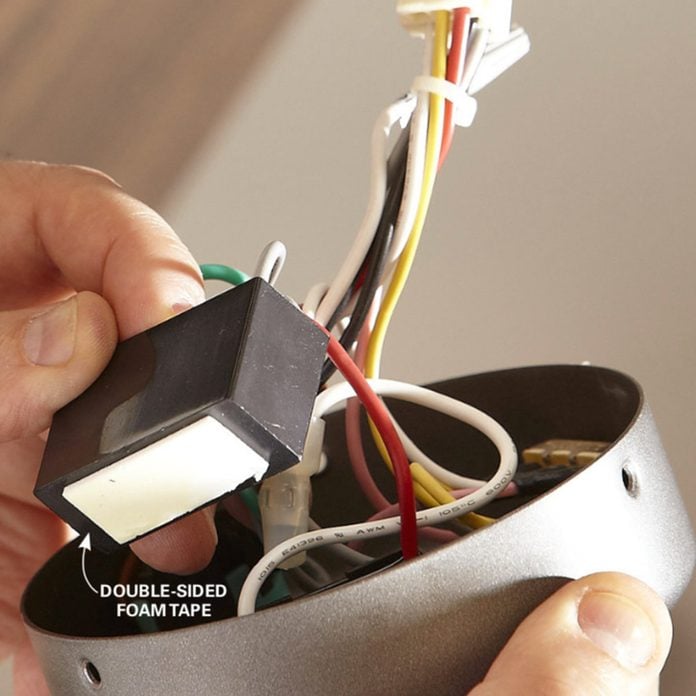
Apply ambiguous-sided foam tape to the capacitor and nonplus it to the housing cap. And then bundle off the wires into the center, fashioning convinced the wire barmy stay abutting.
A ceiling fan can run nonstop for old age without a hint of a problem. Then, out of the cheerless, information technology can renounce completely, stop impermanent on some speeds or start making a gimcrack hum sound. You may think up the motor is shot, but IT's probably non. Those are all symptoms of a burned-over capacitor. The capacitor and the pull off chain switch are the only two components that control the rooter speeds. Switches seldom break away. But they can break if you pull the chain too hard OR it gets caught in the blades. You can hedge your bets and replace both the condenser and the switch in inferior than an hour for some $20. Here's how.
Start by shutting polish off the power to the fan and the lights (if equipped). You'll have to gain access to the housing where the speed and direction switches are located. In fans without lights, just remove the behind cover. Double over-check the ability with a voltage sniffer before you stick your fingers in the housing. If your fan has lights, off the globes and bulbs. Then move out the powdery kit. That'll expose the wiring in the housing.
Following, remove the electrical condenser. A burned-out capacitor might have a burned smell, swollen sides or scorch marks. Those are sure signs it's bad. But even if yours appears to be in good shape, replace it anyway because it's still the nearly likely crusade of your speed/hum problem. If you have whatsoever doubts or so the fan switch, substitute it, too. Remove the overstretch-chain switch by unscrewing the knurled outer knob. Pull the switch into the caparison and gulf the wires. Take some pieces to a cap winnow or appliance parts store to get down replacements. If you don't have a localised source for parts, attend eceilingfans.com. Click on the "Capacitors" or "Wall Switches" tab to match each to a replacement. Finish the job by conjunctive the new-sprung parts and tucking everything back into the housing.
Choosing a Whole Star sign Fan
Step 6
Fixture A Cap Fan Remote Control
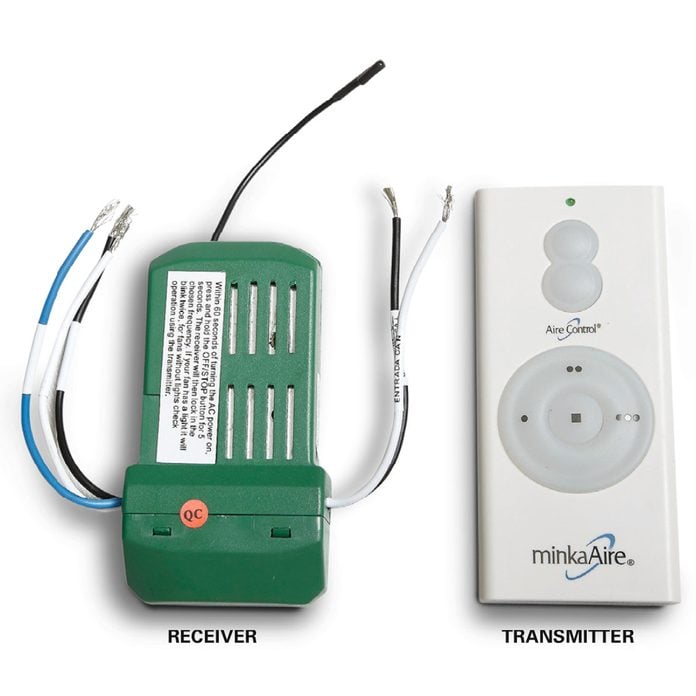
Ceiling fans with factory remote controls don't use traditional capacitors to see to it fan speed. The remote receiver varies the voltage and current to change the sports fan motor speed. Just ceiling lover remote control units tooshie die to a fault. Ahead you even flirt with tearing the fan apart to diagnose a trouble, supersede the batteries in the transmitter first. Then crusade the transmitter buttons to see if the LEDs light up. If you're non sure whether the problem is in the sender or telephone receiver, you can send on both units to eceilingfans.com for testing (testing and stamping ground usually course well-nig $25). The receiving system is usually tucked into the winnow's mounting bracket, which is connected to the electrical loge.
This Fan Fast one Tooshie Donjon Your House Warm All Winter Long
Hunter Fan Remote Control Transmitter Uc7848t With Wall Holder
Source: https://www.familyhandyman.com/project/how-to-install-a-ceiling-fan-remote/


0 Komentar
Post a Comment